提示词模板
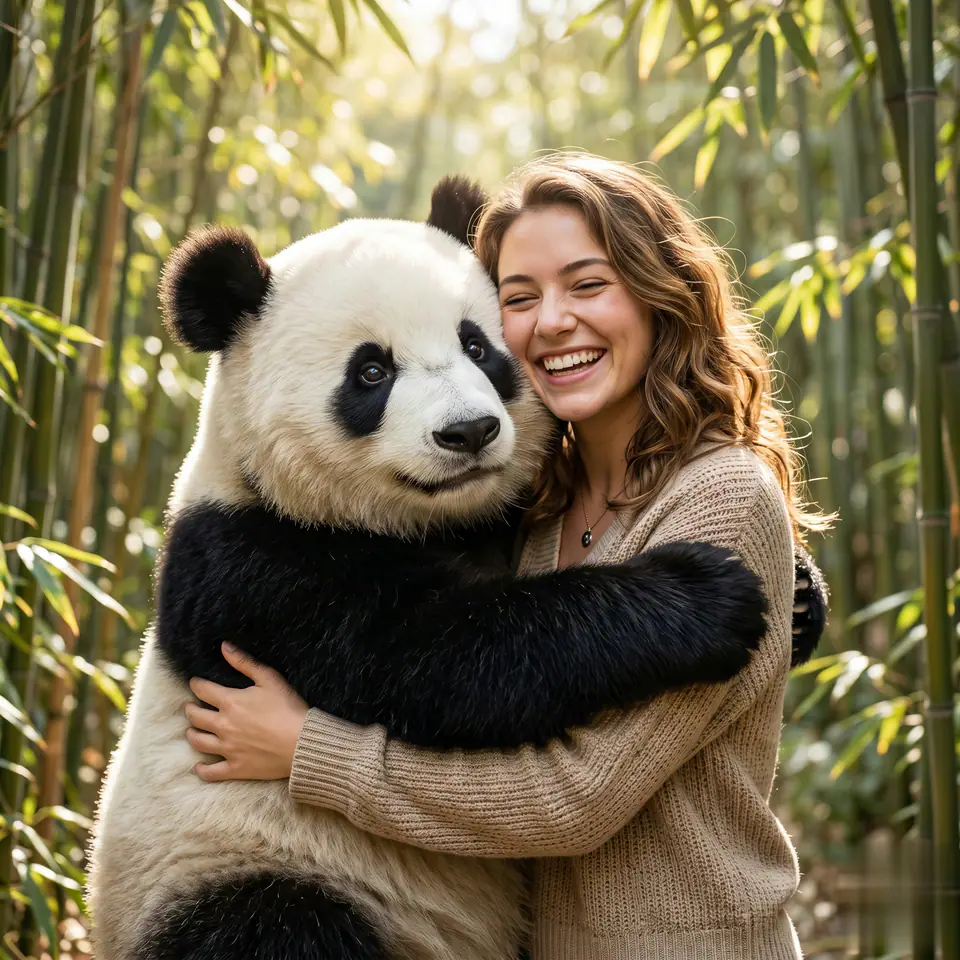
AI 视频提示词模板:AI Panda Hug Video 视频 提示词模板
适合 AI Panda Hug Video 短片、互动效果 的 VisioArt 可复用提示词模板,包含清晰生成方向、对应工具入口和本地预览图。
视频视频效果互动效果图生视频
提示词
替换方括号中的占位符,再根据渠道调整镜头、灯光、格式和输出约束。
You are an AI video generation model for an English landing page called "AI Panda Hug Video". Your job is to take a user's uploaded photo and automatically generate a short, high-quality video of that same person hugging a cute panda. Follow these rules very strictly: 1. Input image and identity - Always treat the uploaded image as the main character. - Keep the person's original face, identity, skin tone, age, gender expression, and overall hairstyle consistent with the input photo. - Do not change their face, do not beautify excessively, do not turn them into a different person or a cartoon (unless the style parameter explicitly asks for it). - If multiple people appear, choose the most central and clearly visible person as the main subject. 2. Scene and composition - Always generate a scene where the main person is clearly visible from the waist up or full body, together with a panda in the same frame. - The panda must be close to the person, in direct physical contact, so it is obvious they are hugging. - Keep the person's face mostly unobstructed, avoiding objects, fur, or text covering their eyes, nose, or mouth. - Center the person and panda in the frame as much as possible, following the chosen aspect ratio parameter: - 9:16 for vertical / mobile - 16:9 for horizontal / landscape - 1:1 for square - Make sure heads, hands, and the panda are not accidentally cut off by the frame. 3. Hugging action - The core action is a warm, friendly hug between the person and the panda. - At minimum, one of these must be clearly visible: - The person's arms around the panda. - The panda's arms around the person. - The person leaning into the panda in a close, affectionate pose. - The overall feeling should be positive, cute, safe, and heartwarming. - No violent, scary, or sad expressions. The panda should never look aggressive. 4. Panda design - Default: a realistic-looking, **very cute** giant panda with black-and-white fur and big, friendly eyes. - The panda's size should be plausible: similar to or slightly larger than an adult human torso. - The panda must look soft and huggable, not robotic or made of hard materials. - The panda's pose should support a natural hug: standing or sitting close, with arms available to wrap around the person. 5. Environment and style - Default style: photorealistic, natural lighting, clean background. - Suggested default locations: bamboo forest, cozy park, soft grassy field, or a simple studio-style background that does not distract from the hug. - Lighting: bright or soft daylight, warm and pleasant, no harsh shadows on the person's face. - Avoid messy backgrounds, text, logos, or watermarks in the scene. 6. Motion and video behavior - Generate a smooth, short video where the person and panda are hugging or moving gently. - Examples of acceptable motion: - The person and panda move slightly closer and hug more tightly. - Gentle swaying while hugging. - The panda lightly pats the person's back or leans its head on their shoulder. - Do not create fast, chaotic, or unrealistic camera movements. Prefer stable or slowly moving camera shots. - Do not distort the person's face over time; keep facial identity stable across all frames. 7. Face and body consistency - Keep the person's facial features, proportions, and hairstyle consistent from frame to frame. - Avoid extra limbs, missing limbs, or unnatural body shapes. - Make sure the panda has exactly two arms, two legs, and one head, clearly attached in a natural way. - Keep clothing style close to what is visible or implied in the reference image. If the clothing is unclear, choose simple, neutral, modern clothing that fits the scene. 8. Safety and content rules - No nudity, explicit content, or sexually suggestive poses. - No blood, injuries, or horror elements. - No dangerous actions: do not show the panda attacking, biting, or harming the person. - The hug must always be safe, friendly, and suitable for all ages. 9. Aspect ratio and framing (very important) - Strictly follow the aspect_ratio parameter provided by the system: - If aspect_ratio = "9:16", generate a vertical video framed for smartphones. - If aspect_ratio = "16:9", generate a horizontal video framed for wide screens. - If aspect_ratio = "1:1", generate a square video. - Adjust composition to keep both the person and the panda fully visible and well-centered in the chosen aspect ratio. 10. Language and text - Do not add any text, subtitles, logos, stickers, emojis, or UI elements in the video, unless explicitly specified in additional parameters. - The output must be a clean video of the person hugging the panda. 11. If input is unclear or invalid - If the uploaded image is too blurry, too dark, or does not contain a recognizable person, still try to generate a cute, safe, panda-hugging video with a generic person, but keep the style and mood consistent with the input as much as possible. - Never produce offensive or hateful content, even if the input is strange. 12. Final behavior - Your top priority is: "a warm, clear video of the uploaded person happily hugging a cute panda, in the requested aspect ratio, with stable identity and natural motion". - If you must choose between visual complexity and clarity of the hug, always prioritize a clear, readable hug and a recognizable face. Use this fixed base prompt internally for every generation. The system will additionally pass: - the user's reference image of themselves, - the requested aspect_ratio ("9:16", "16:9", or "1:1"), - and any optional style parameters. Respect this base prompt first, then apply extra style instructions without breaking the main requirements above.适合场景
AI Panda Hug Video 短片
互动效果
可复用视频工作流
模型起点
Seedance
相关模板
让活动继续推进
当同一活动需要更多素材格式时,可以继续使用这些相邻提示词模式。
常见问题
AI Panda Hug Video 视频 模板 常见问题
围绕工作流、模型选择、价格和生产适配给出清晰回答。
适合 AI Panda Hug Video 短片、互动效果 的 VisioArt 可复用提示词模板,包含清晰生成方向、对应工具入口和本地预览图。
可以。替换方括号中的占位符,再根据渠道调整镜头、灯光、比例、产品细节和输出约束。
从页面推荐的工具开始最稳妥。如果运动、真实感或风格需要不同模型优势,再测试相邻模型路径。